
The Commission That Was Never Real
Los renglones torcidos de DiosThe supposed detective assignment gradually reveals itself as part of Alice’s delusional interpretation, even as her investigative abilities remain demonstrably real.
increasing Bearing strength in each event
 decreasing
Bearing strength in each eventdecreasingA Plausible Request

A Story with Credible Details
The alleged client
A visitor invokes the real murder of Severiano and claims to be his son, giving Alice a familiar public case to investigate. The request seems professional and emotionally persuasive rather than obviously fantastic.
A practical plan
The supposed client suggests a covert admission and describes a paper trail connected to the hospital. The plan’s specificity makes it convincing to Alice and later makes it difficult for her to recognize that its central premise is false.
A Case Built from Clues

Investigation Within the Delusion
Real skills at work
Alice notices handwriting, access to restricted materials, and behavioral patterns that may identify a letter writer. She questions residents and organizes evidence with professional care.
The mistaken framework
Her methods are often sound, but the framework connecting them to a client and a murder commission is not. The novel lets her competence and illness coexist, preventing either one from simply cancelling the other.
The Client Disappears
The Story Breaks
A failed recognition
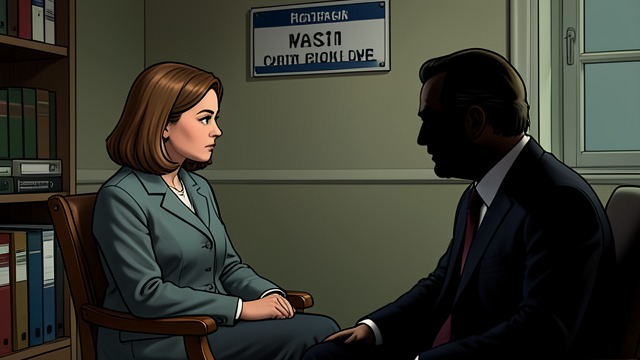
Alice meets a man introduced as her client, but she insists that he is not the person who brought her to the hospital. His appearance destabilizes the whole explanation she has relied on.
A retreat from inquiry
The contradiction deepens her uncertainty and contributes to her effort to escape. Later disclosures confirm that the client and investigation were not literal events, even though Alice’s memories of them felt entirely real.
After Alice’s birthday gathering
During Alice’s early weeks in the hospital
After the false García del Olmo arrives
